You speak English.
But do you speak American?
You already know English — the grammar, the vocabulary, the meetings, the emails. Speaking Between the Lines helps international professionals understand the tone, context, indirect language, and unwritten rules behind how Americans actually communicate.
"You may understand every word someone says and still not understand what they actually mean."
What did they actually mean?
Americans communicate in a kind of diplomatic encryption. Here's the decoder.
- "With all due respect…" a disagreement is coming
- "Let's circle back." maybe never
- "That's interesting." anywhere from genuine curiosity to polite horror
"We should definitely get coffee sometime!"
What does it mean?
This can sound optional. Often, it isn't. Depending on the relationship and workplace culture, "when you have a chance" may actually mean:
- Please prioritize this soon
- This is genuinely low-priority
- A softened way of setting a deadline without sounding demanding
You'll learn to read tone, urgency cues, and relationship context so you know which one it is.
This single sentence could mean several different things:
- They genuinely want to revisit it later
- It's not currently a priority
- A polite disagreement
- A soft rejection — the conversation is effectively over
The words don't tell you which. Tone, timing, and body language do.
Does that mean another plan is actually coming? Maybe. It depends on:
- Whether they suggest a specific time or leave it open
- Whether they follow up afterward
- The general warmth and directness of the conversation
This is one of the most common sources of confusion for newcomers — and one of the easiest to learn to read.
Real situations, not textbook language.
Five areas where meaning quietly gets lost.
Workplace
Meetings, feedback, hierarchy, and communicating with managers.
- Giving & receiving feedback
- Disagreeing professionally
Social Life
The unwritten rules of invitations, friendships, and plans.
- Invitations vs. polite suggestions
- Making friends as an adult
Between the Lines
Indirect language, soft rejection, and hidden meaning.
- "Maybe." "We'll see." "I'll let you know."
- Enthusiasm vs. politeness
Digital Communication
Email, Slack, texts, and what they signal.
- What "just following up" really means
- When no response is a response
Cultural Navigation
Broader American norms, explained without judgment.
- Directness vs. indirectness
- Self-promotion & initiative

Hi, I'm Wanda.
I'm a native English speaker who also speaks French and two other languages — so I know what it's like to learn to read a culture from the outside in. I've spent more than 20 years teaching English and cultural communication around the world, including at the American English School in Bamako, Mali, and for the past 7+ years at WEC. I've also taught at IDIA, the Institute of Diplomacy and International Affairs, and worked with embassy staff and international professionals throughout that time.
I'm not here to tell you American culture is better. I'm here to hand you the code. What you do with it after that is entirely up to you. (And yes — with two kids of my own, I'm fluent in the newest slang too.)
Flexible formats, built around real conversation.
Delivered through discussion, real scenarios, and case studies — never a textbook.
Small-Group Workshops
Weekday evenings, small groups of up to 4 — timed for people who work during the day.
Private Coaching
One-on-one sessions tailored to your workplace, role, and situations.
Corporate & Embassy Programs
Custom sessions for organizations supporting international staff.
In-Person & Online
Washington, DC sessions and virtual options for anyone, anywhere.
For people who already speak English but want to understand America better.
Real reactions from real sessions.
"I used to hear 'That's one way to look at it' and think the person was agreeing with me. Now I know it can actually mean, 'I definitely don't see it that way.' That was such an eye-opener."
— Ellena
"The biggest surprise for me was learning that when a boss says, 'Could we maybe…?' it may not really be a question. Sometimes it means, 'Please do this.' I understand workplace conversations so much better now."
— Kateryna
"I always thought 'sure' just meant yes. Now I can hear the difference between an excited 'sure,' a reluctant 'sure,' and a 'sure' that basically means 'whatever.' I pay so much more attention to tone now."
— Tania
Straightforward, reasonable pricing.
No hidden fees, no "contact us for a quote" runaround for individuals — just clear rates.
Private Coaching
$75 / hour
Small-Group Classes
$125 / class
Corporate & Embassy Programs
Custom quote
Friday Club
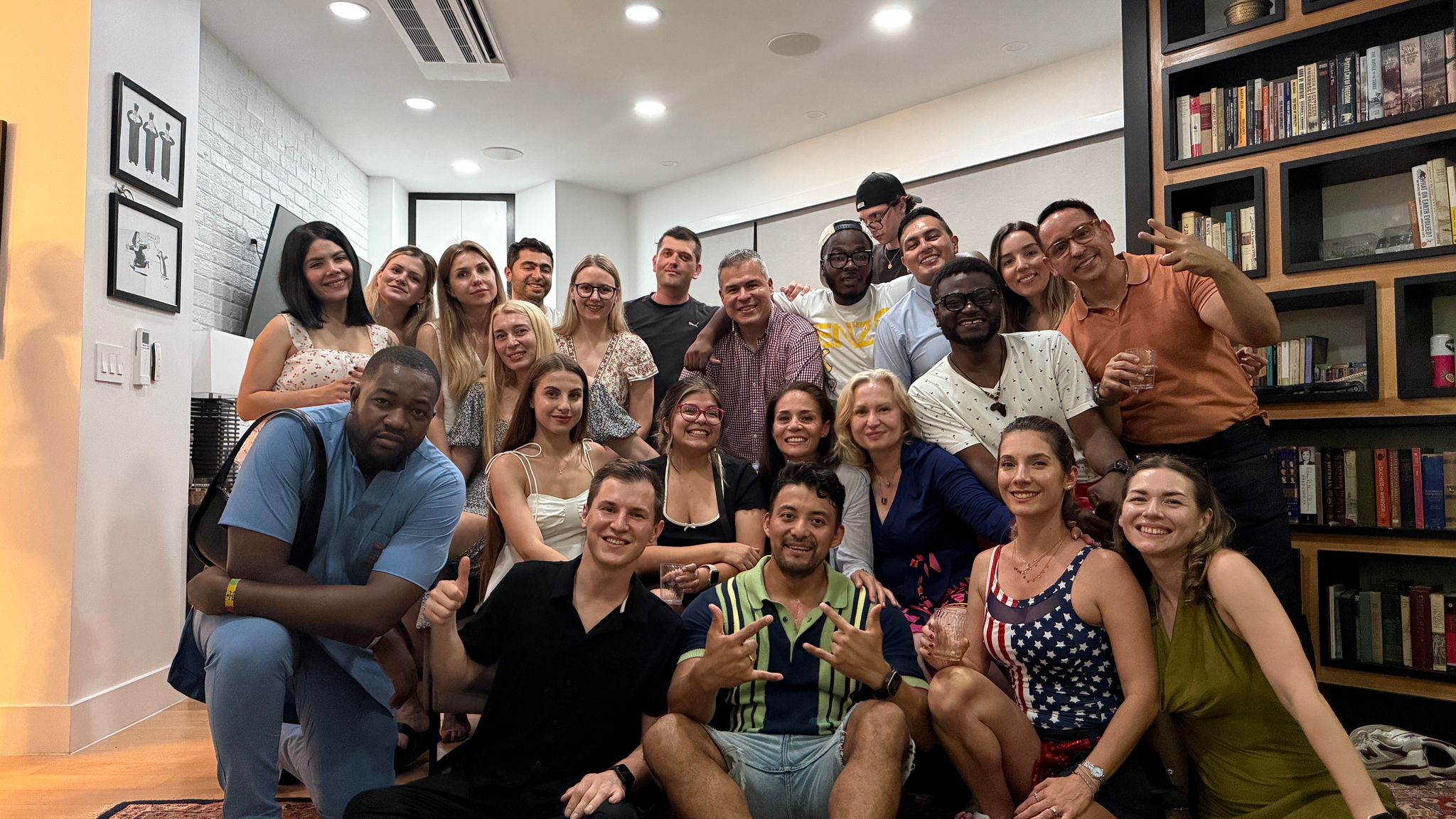
Every Friday, join our community conversation club — free to attend, in person. Come practice, ask questions, and compare notes with people navigating the same things.
 Join Friday's Club